5
May

Alternative Energy 101

by Tiffany in Environment

With the massive oil spill that just occurred along the Gulf Coast, energy sources and solutions have been thrust into the limelight. Environmentalists are sharing a little “I told you so” in reference to oil drilling and political right wingers try to downplay the significance of this spill in the hopes that oil drilling will continue unhindered. As one local man said to me recently… “it is shame what happened but I would rather have oil spills if the alternative is that I pay more than $3.00 a gallon for gas.” Never mind the devastation to people’s property and businesses that live along the Gulf Coast and who cares about the loss of marine life right?

For many people this oil spill is just confirmation of what they have been saying all along… oil is soooo 5 minutes ago! If anything, these events should tell us we need to bite the bullet and invest in alternative energy NOW.. even it means we pay a little more at the pump and even if it means we have to look at wind turbines in our “back yard”.

A wind spill might mess up your hair, a solar spill might give you a tan, but an oil spill… yeah there is no upside to that is there? We need to find another alternative and the “Drill Baby Drill” people need to go away and shut up… AFTER they volunteer at the front lines for oil spill clean-up of course!

Wind, solar, and geothermal energy are probably terms your are familiar with. You have likely read about them in several places.  But you may not know about the pros and cons, the costs both fiscally and environmentally, the potential savings, and other details. Here are some of the basics about these types of alternative energy.

1. Wind Energy

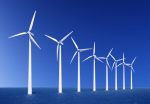
Wind is a renewable energy source. Even though it comes and goes, it can’t be used up.This makes it an attractive choice for homeowners, and is considered a viable means by which entire communities can be supplied with electricity. The wind’s energy is harnessed by rotating blades of various shapes and sizes (wind turbines). Wind power is not without its downside, though. Here is a brief description of the basics of wind power and its pros and cons.

Cons:
* You have to have flat, windy terrain for wind turbines to work
* Equipment and set-up can be very expensive (this is especially true for the construction of large wind farms)
* Turbines must be maintained by professionals or a well-educated homeowner
* Large turbines can be noisy and harmful to flying creatures

Pros:
* Wind is a renewable, clean energy source
* Your utility costs will go down significantly as you supplement your home’s power with wind-generated energy
* You can have a small wind turbine on your own property if there are no restrictions. Home wind turbine kits are not very expensive and are widely available
* Homeowners with property in “wind fertile” areas can make a lot of money allowing wind turbine companies to place equipment on their property. I heard of one Texas man that gets $300,000 annually, simply for allowing wind turbines to operate on his land!

2. Solar Energy

The invention of solar panels makes this renewable energy source very flexible. Solar energy can power small items like iPods or cell phone chargers, or they can meet the energy needs of entire households and even communities.

Cons:
* Solar energy can only be collected when the sun is shining
* Solar panels can be tricky to install on your home
* The materials used to create some solar panels and cells can be harmful to the environment.

Pros:
* Solar energy is clean and renewable
* Batteries can be used to store extra power for use when the sun is not shining
* New companies are emerging that allow you to “rent” the solar equipment in exchange for letting them sell excess energy produced… a win, win for all.

3. Geothermal Energy

Geothermal energy makes use of the earth’s cooler (in summer) and warmer (in winter) temperatures. Geothermal heat pumps circulate liquid under the earth’s surface to be cooled or warmed depending on the season.

Cons:
* A great deal of digging and construction is necessary to install a geothermal heating and cooling system

Pros:
* Once again, this is a renewable source of energy that is clean
* You will be “off the grid” and not subject to power company rate-hikes
* Government financial aid and tax rebates may be available to help finance your upgrade

Generally speaking, all of the above have certain pros and cons associated with them. The trick will be to find the right balance and to to divert more funding to advancing the technology in each of these areas. Installation of alternative energy systems needs to be done by professionals, which can get pricey. The upside is that our children can get in on the ground floor by becoming engineers and installation experts and make a great, green future for themselves and for humanity. Your property and location can make or break your own energy plans. Depending on where you live, you may have no choice but to remain on the grid but even you can push your township to use clean energy instead of fossil fuels. The more pressure we put on them, the faster it will happen. You won’t need to worry as much about power company rate-hikes breaking your budget because wind and solar supplies are renewable. This is no doubt why energy companies don’t want green energy to take over our power grids.

These three represent the major players in alternative energy and the more we educate ourselves about them and pursue them, the easier it will be to realize the dream of getting rid of dirty energy sources that only provide short term solutions with a side helping of long term devastation.

Wednesday, May 5th, 2010

4 Comments

4
May

What Is Your Microwave Doing To Your Health?
by Tiffany in A Green Home, Healthy Eating

When we moved last year we finally said goodbye and good riddance to one popular appliance… the microwave. The old one stayed with the house and I knew that we would not be purchasing another. It was time to say goodbye.

We didn't use our old one very much but the very presence of it meant that we did use it occasionally… say for melting butter or to heat up leftovers quickly. I didn't want to use it, but it was hard to resist the convenience. It was just one of those things that required some cold turkey action I guess. Now, a year later, I wonder what the big deal is about a microwave. If we can't eat it raw, or heat it or cook it on a stove top, then we don't it eat it… end of story.

But why exactly did we want to get rid of our microwave? What is so bad about microwaving your food? Well, the very fact that you can heat food in mere seconds without the microwave being hot to the touch should tell us that microwaves heat our food in a very different way than a stove. Microwaving food is essentially irradiating our food.  According to Robert O. Becker M.D.'s and his book The Body Electric, it is unhealthy to even be in close proximity to a microwave. There is a lot of data out there to suggest that microwaves change the chemical make-up of our food, making it unrecognizable to our body as food, creating an immune response in the body, and possibly changing our food to something unfit or even dangerous for us to consume. 

If all a microwave did was heat the food and not change the food, then why would a woman have died in a 1991 Oklahoma case after blood for a transfusion was heated in a microwave? The blood for transfusions was usually heated before procedures but not in a microwave. After receiving microwaved blood the patient, who was getting hip surgery, reacted to the blood and died on the table.

For years we have been told by experts not to microwave breast milk since it kills the beneficial elements found in it. We have also been told not to microwave formula, but the reason given is usually the chance that "hot spots" will burn the baby. I think it is because most experts know that microwaving the formula is rendering it lifeless and maybe even toxic. If even some of the research on the effects of microwaved food can be proved conclusively true then it is a travesty how many children have been raised drinking microwaved milk or formula. Could this be another reason, in an ever growing list of reasons, why kids are so unhealthy today?

In that same article (linked to above) it shows how a Swiss biologist and food scientist Dr. Hans Hertel studied the effects of microwaved food and found that the blood of people who ate microwaved foods showed a decrease in hemoglobin and cholesterol values, in the HDL (good cholesterol) versus LDL (bad cholesterol) ratio and in white blood cells, weakening the immune system, and an increase in leukocyte levels, which tends to indicate poisoning and cell damage—conditions ripening the body for degenerative diseases and/or cancer. On the cover of a magazine that published one of his studies there was a picture of the Grim Reaper holding a microwave oven in one of his hands.

Another research paper worth reading is by Lita Lee Ph.D (chemist, enzyme therapist, nutritionist, author and lecturer that has been in private practice since 1984). In this paper she discusses how microwaves are labeled as health hazards in Europe and other developed countries. They are even outlawed in some countries, such as the Soviet Union. It goes on to explain exactly how they work and why they are harmful.

You have probably also done some field work on your own that confirms these findings. Put a lovely dish of fresh food in the microwave and look at how it comes out… a lifeless, melty blob. Microwaved food is VERY unappealing because of the way it looks on the outside… it is just as unappealing on the inside though.

The data on microwave ovens shows that they change the chemical makeup of the food they cook and that those changes can and do lead to changes in our blood that can cause deterioration within our bodies. While there may be much we don't know about microwaves the things we do know are sufficient enough for me to take an item that I rarely used and ensure it is an item that I never use. After one year without one, I wonder why it was I even thought that having one was necessary. The only area I need to address is the rare time when I might eat out… I need to make sure that any restaurant that I patronize hasn't used a microwave to heat the food because there are some restaurants that I know of (Applebees for instance) that do. 

How do you feel about microwaves? Do you use one? Is getting rid of it hard for you?

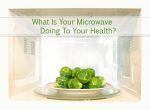
Photo above via Flickr by DonnaGrayson.

Tuesday, May 4th, 2010

31 Comments

3
May

Use Less Plastic

by Tiffany in Environment

A fun and energizing video for Monday morning about plastic of all things. Now if only they would show videos like this in schools, on big screens before movies, and an on public TVs…

Check out my article: 5 Easy Steps to Reduce Plastic in Our Lives

Monday, May 3rd, 2010

No Comments