7
Jan

The Benefits of a Babymoon

by Tiffany in Birth & Baby

You will have heard of a honeymoon, but what about a babymoon? A honeymoon is understood to be a time of intimacy and closeness between a bride and groom, and a babymoon is also a time of intimacy and closeness. It’s a time for a mother and baby to get to know each other. Breastfeeding, attachment, and many necessary things occur when a mother takes time out for a babymoon.

The concept of a babymoon is not new, even if the term is. The term “babymoon” has been used to refer to close time between couples before the birth of their child, but generally speaking the term is reserved for those few weeks after birth.

All over the world, various cultures recognize the weeks immediately following birth to be an almost sacred time of rest and solitude for mother and baby. In some parts of the world, new mothers are pampered – fed special foods, given massages, and otherwise treated with care during the postpartum period. There is a reason why this global tradition is being upheld – there are many benefits. Here are some.

Healing

Your body has undergone a tremendous series of events. Pregnancy and childbirth, depending on the circumstances and health of the mother, can be draining at best and traumatic at worst. Your body needs time to heal physically, especially in the case of perineal tearing or a C-section. It also needs time to heal emotionally, as your body undergoes enormous hormonal shifts after birth and you adjust to the new routine of baby care.

Bonding

Western cultures tend to discourage mother-infant bonding. Mothers talk about how little their child needs them and how well he or she goes with a caregiver. But the importance of close bonding should not be diminished. During the babymoon, mother and baby should have lots of skin-to-skin contact and interaction. The close bond that is formed will build a foundation of security that will last for the rest of the baby’s life.

Health

An old midwife recommendation was for a new mother not to leave the house for six weeks. More and more we are discovering the wisdom of that caution. During the first six weeks of life, a baby’s immune system is still developing. It’s a germy world out there, and while exposure does help build immunity, the immune system must be ready before exposure can have any beneficial effect.

Breastfeeding

The health benefits of breastfeeding are too numerous to list here, but suffice to say that a babymoon encourages the breastfeeding relationship. Mother and baby have time to bond and learn the sometimes challenging art of breastfeeding without the rush of trying to get back to the old routine right away.

Friday, January 7th, 2011

4 Comments

6
Jan

Homeschool is Cool Resources for December
by Tiffany in Homeschool

History Workbooks and Texts for Homeschool

December was a short “school” month obviously so I do not have as much to report as far as cool new-to-me resources. But I do have a few.

I find that we are not using the Oak Meadow curriculum I bought. I guess even that is too structured for me. I think we are basically a mix of eclectic homeschoolers and unschoolers and we tend to learn in units and based upon our interests. We don’t feel like tackling each subject every week (or month) or often times we want to incorporate those subjects into other ones and learn by doing. For some things I like textbooks and book reading and for others I like worksheets and labs.. history, math, science. Writing and spelling happen by doing the first three. So we have been using some of the resources below and using some more unconventional means of learning. We have been taking hikes a couple times a week and identifying birds, trees, and other aspects of nature. I signed my son up for Art lessons at a local studio, plan to enroll him in a gym class with personal trainer, and we visit the zoo or the science museum to see the exhibits, due sponsored activities, or take in the latest IMAX documentary. A documentary on The Great Lakes and one on Geckos is coming up. This week he is going to a Monster Truck Jam. I swear the kid knows all the trucks and drivers as well as what they have going on mechanically.

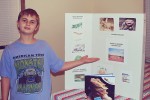
One interest lead unit we just completed lasted from November through December. My son wanted to study up on Bearded Dragons. He read library books about them, did Internet research, watched YouTube videos, and learned as much as he could about these reptiles. Then he did a display project all about them… what they eat, where they come from, the conditions in which they live, how to care for them ,ect.

Bearded Dragon Homeschool Project

Then we ended the unit by buying him a Bearded Dragon and the needed setup. The Bearded Dragon was a gift for doing such great research and he worked for and paid for much of the needed gear. My husband managed to get some great deals for him. The 20 gallon starter tank, lid, and UVB light were only $10 at an auction!

Meet Sammy… I have to say I was not anxious to bring a Bearded Dragon into the home but he/she is a cutie!

A Bearded Dragon

We have also taken a step beyond our unit study and my son has started (with my help) a blog all about Bearded Dragons. The education continues as he writes and makes videos for YouTube and his blog.

Homeschool is Cool Resources

History Odyssey: Ancients – We are loving this history curriculum. It essentially uses the books pictured at the top of this post… The Usborne Encyclopedia of World History, The Story of the World: History for the Classical Child: Volume 1:, and History Pockets: Ancient Civilizations, as well as several books we can get via the library. All of these resources are beyond excellent and can be used in conjunction without the History Odyssey curriculum but I like how it is presented and executed.

The Usborne Encyclopedia of World History – This book gets its own section because it ROCKS! The photos are beautiful, the info is wonderful, and it has Internet links that accompany each section that you can explore for fun stuff and more info. The section on Ancient Egypt for example has links to a resource for helping you recreate an Egyptian board game that young Egyptian kids would have played. Also a link to a place where your child can type in their name and see how it is spelled in hieroglyphs. This book could be a stand alone curriculum!

Educaching – We haven’t tried this yet but it is on our too-get list. We do not have a GPS device as of right now but we have wanted one for awhile so we can start doing geocaching which is to use a GPS to find hidden caches. It has become a popular past time and this is the first curriculum to pop up that caters to the idea. It uses geocaching to teach math, science, and social lessons. Any curriculum that requires hiking and exploring sounds good to me!

The Bears on Hemlock Mountain – Good book alert! My son and I enjoyed this book as he read to us. William Dufris’s homey voice invites listeners to settle in for a favorite family story. As Jonathan’s mother plans for a family christening celebration, she realizes that only Aunt Emma’s pot is large enough to hold stew for 20 relatives and that only Jonathan can be spared from the farm work to fetch the cauldron. Dufris coordinates his pacing and mood to Jonathan’s trek over the mountain–speedy and jaunty as Jonathan sets off reciting his mantra “there are no bears on Hemlock Mountain,” poky as Jonathan stops to feed forest animals, and elongated and exaggerated as darkness falls. How alone IS Jonathan as he hides under the pot to wait for help?

Carschooling: Over 350 Entertaining Games & Activities to Turn Travel Time into Learning Time – Admittedly we don’t drive so much that we need to make travel learning a big concern. But travel fun is always good right? Once every other week we do usually make a trek up North to visit with grandparents so this book has been nice for ideas. Mostly it is full of games that you can play on the road like Backseat Spelling Bee or Highway Hangman… good stuff.

This article on Making Curriculum Work for You from the Weird, Unsocialized, Homeschoolers blog.

Enjoy!

Thursday, January 6th, 2011

5 Comments

5
Jan

Natural Cures Spotlight – Cloves

by Tiffany in Health & Healing

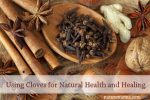
When I think of cloves I think of mom’s home cooked ham with cloves stuck inside for fragrance and flavor. I think of pomanders made with cloves and oranges. Generally I associate cloves with good food and good feelings. They are a miraculous little flower though for healing.

Cloves come from an evergreen tree called Eugenia Caryophyllata. This tree is native to Indonesia, and the dried flower buds are what we know as cloves. The oil is extracted from these buds, and also from the stems and leaves.

Clove has been used as a breath freshener and toothache reliever for centuries. Its ability to stave off disease was known in the ancient world, but why it is effective against illness was not known until bacteria and microbes were discovered. Clove has antibacterial, antifungal, and antiviral properties.

We can still experience clove’s benefits today. Here are some of them.

* Oral health – Using a solution of diluted clove oil as a gargle or mouthwash is effective against sores in the mouth and/or bad breath.

* Athlete’s foot – Clove’s pleasant scent and antifungal properties make it a good treatment for athlete’s foot.

* Tooth and head pain – When diluted with a carrier oil and applied directly to the painful area of the mouth, clove oil numbs pain. Even some commercial preparations intended for oral pain relief contain clove oil. Massaged into the temples, clove oil is also said to relieve headaches.

* Antiseptic – Diluted clove oil makes a soothing antiseptic ointment for cuts and scrapes. Its antimicrobial properties help prevent infection.

* Upper respiratory health – A steamy bowl of hot water with a few drops of clove oil can provide a healing, anti-inflammatory steam that you can inhale.

* Digestion – Clove oil helps treat flatulence and indigestion. When it is added to foods it can help offset some of the negative digestive effects of the food.

* Cholera – Several sources suggest that this serious disease can be and has been treated effectively with clove oil.

How to Use Clove Oil for Natural Health and Healing

Clove oil should always be diluted with a neutral carrier oil such as almond or olive oil if it is to be used topically. It can be diluted in water for gargles, washes, and other treatments. Other suggestions are:

* Clove tea (simmer a teaspoon of cloves in a cup of water)

* Clove lozenges – use clove oil to flavor homemade hard candies.

* A few drops of clove oil added to a cup of carrier oil can be used for massage and as an antiseptic.

* Insect repellent – cloves stuck into an orange or apple, and then dried makes what calls a pomander. This repels insects when hung into a closet or placed in a clothing drawer.

* Foot powder – make an antifungal foot powder by mixing 3 parts cornstarch, 1 part baking soda, and 3-5 drops of clove oil. Shake well.

For more practical advice on natural healing I HIGHLY recommend this awesome ebook written by a talented mama and blogger called Herbal Nurturing. It rocks!

Wednesday, January 5th, 2011

2 Comments

3
Jan

Happy With What You Have – Feng Shui Tips for the Home
by Tiffany in A Green Home

One of the most important aspects of minimalism and learning to live with less is learning to love what you have. This is one of the reasons why I love Feng Shui. It is all about accentuating what you have and creating a sense of beauty and peace within the home. I know you have had the thought once that you just cannot concentrate with all the clutter around you. Well, Feng Shui is abut decluttering and arranging furniture and other furnishings in ways that will allow for positive energy flow. I know it was a big help to me in the corporate world. By the time I left my job to stay home with my kids all my coworkers had running water fountains, mirrors, ect. in their offices because they had soaked up all my Feng Shui tips like a sponge or I had helped them set up their offices at their request. Our offices were little dens of peace we found, not prisons where we had to stay 9-5. To me Feng Shui is more than geomancy. It is also about the Law of Attraction (LOA) and sending out into the universe what you want to get back. It is like setting the stage for all the good things you KNOW will happen and openly welcoming them. One of my goals for 2011 is to give my home a Feng Shui makeover.

It is a means by which people can feel more peaceful and content in their personal space. It’s more psychological than theological, although some practitioners of Feng Shui believe in the invocation of the god of luck. While I am not specifically religious I am spiritual. I do have a trio of Hindu dieties in my home… Ganesha, Lakshmi, and Saraswati. The first two are my background on my computer as well. But regardless of your beliefs, Feng Shui can be used by just about anyone. If you would like to bring Feng Shui into your home, here are some tips on how to get started.

Clean up – Part of Feng Shui is being surrounded by things you love, but only the things you love most. Everything else needs to go. Donate whatever you can instead of throwing it away. Ask yourself if you have used or enjoyed a particular object in a year. If you haven’t touched it in a year, you probably won’t miss it when you give it away. A tenant of Feng Shui is to make sure everything in your home is either useful or beautiful. This has been hard for me with young kids… everything is either useful or horrendously ugly. Such is the life when your young kiddos destroy everything nice you have so you just stop buying nice stuff. The lamp I have next to my computer is a reminder of this. It was a lovely thrift store find and I was so happy with it, until my 6 year old leaped off the back of the couch and landed on it, destroying the beautiful shade… sigh. I am determined to let some beauty back into my life now that my kids are getting older.

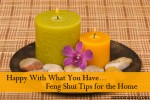
Light – Feng Shui is about energy, and opening things up to a good flow of energy. Light is an important component of this. Emphasize natural lighting wherever you can by opening all your windows. It is amazing how that simple step can be overlooked. First thing in the morning open all your windows or blinds. You can also use energy-efficient bulbs that have a daylight type of spectrum. This helps with seasonal affective disorder. If you get depressed or sad in the winter, you need a full spectrum sun light. One of my fave ways to accentuate light is to put prisms in the windows so that little rainbows dance all around. In the evening, soft lighting is recommended. Light beeswax candles and use low-wattage bulbs in lamps.

Fresh air - In addition to natural light, natural, fresh air is also helpful is bringing good energy flow into your home. Whenever weather permits, let outside air in. Consider a quiet air purifier and toxin-absorbing houseplants to make your indoor air even cleaner.

You can also purify the air by using natural essential oils. In Feng Shui, essential oil of rose, lavender or jasmine is recommended for the bedroom; peppermint or lemon for rooms where you want to be awake and energized. They have some really cute essential oil burners on Amazon.

Water – Having a water feature in the home is an important aspect of Feng Shui. Water in the home’s entryway is especially beneficial. A wall or tabletop fountain can fill this need. The water should be running; just a bowl of water won’t do. Aquariums are also favored in Feng Shui. Ever wonder why so many Chinese restaurants have aquariums and/or fountains? They are symbols or harbingers of good luck.

Objects – Of course you still have objects in your home. Arrange these in a decorative, organized manner so that it is pleasing to the eye. On your desk, place a small plant or desktop fountain. The color red or purple is recommended for the desktop work space, as it is associated with wealth. In your home, make sure the entryway is clear of clutter and especially shoes. Consider placing small objects in decorative boxes that can be neatly stacked. You should read a good Feng Shui book if you want to know more about specific placements and colors that should be used in different areas.

Wall Colors – Soft pink is considered ideal for the bedroom (passion). Soft shades of beige and yellow are also good for promoting nourishment and stability. Use red (high energy) in rooms where a lot of activity occurs and you want an energized atmosphere. Red is not recommended for a wall color, however, but only as an accent color. Blue is is good for promoting happiness and abundance and green and brown are good for health and vitality. For more info on color therapy I recommend How to Heal with Color.

So are you ready to Feng Shui?

Monday, January 3rd, 2011

4 Comments