A Guest Post From Amanda
Learning to garden was a process reflective on my stage in life. The first time I planted a vegetable patch, I worked for hours in the soil, tilling and clearing a space. My knees and the palms of my hands were stained with dirt. I was young and I didn’t have the patience or the softness of heart to tend to vulnerable seedlings, so I bought some plants from the hardware store and planted them. And I left them. I washed my hands and trimmed my nails and came back a few days later to find that every last plant had been eaten by deer. That’s the way life worked for me as an impulsive youth. I decided that gardening wasn’t for me.
As I got older and started a family, I became interested in the idea of eating local, eating organic and above all, eating actual food. I had never cared much about my health, but now that I had a child depending on me, I wanted to live well and for a long time. I looked at the ingredient list in the “heart healthy whole grain bread” I was feeding to my one year old daughter. Included in a list of thirty-six ingredients were things like: Enriched Bleached Flour, High Fructose Corn Syrup, Sodium Stearoyl Lactylate, Calcium Peroxide, Datem, Ascorbic Acid, Azodicarbonamide. I realized that this bread wasn’t actually bread at all. It was simply a monster science product, packaged as bread. If someone handed me a bottle of Azodicarbonamide and asked me to feed some to my child, I would most certainly refuse. So, why I was I okay with feeding it to her, as long as it came in a cleverly advertised package? If I bought bread from a local bakery, or better, if I baked it myself, it would contain flour, yeast and water. Those were all ingredients in actual food.
Over the next few years, my interest in eating actual food became stronger. I started to shop locally and made meals from scratch. I bought organic, seasonal produce and became seduced by the “shop local, eat local” trend. My daughter and I would go to the farmer’s market on Saturday morning and buy greens for our smoothies and juicy, real tomatoes that killed my ability to eat a supermarket tomato ever again. Mostly, we enjoyed the company we were keeping. The market was always filled with knowledgeable, liberal people with a wonderfully positive outlook on food and the way it related to society. I started to understand the concept of buying local produce was more than just a trendy mantra. It was easy, really. All it meant was that healthy, real food wasn’t grown with chemicals we would be afraid to allow our children to ingest. Actual, fresh food didn’t sit for weeks and weeks without being eaten or get injected with dyes. It was grown at home and eaten as soon as possible after harvesting. I realized that, while I had always enjoyed being one of those farmer’s market, organic-loving mamas, I was also one of the people who believed in being as self-sustaining as possible and I could do this on my own.
I had another daughter, and the three of us fell in love with the dirt over her first summer. I would plop my fat, healthy baby right into the soil and let her explore the textures (and more often than not, the tastes) of the earth. Her little toes settled right down into the mud. My four year old was interested in digging and feeding the soil. I gave her a little patch of land to cultivate all on her own and she grew bunches of kale that were bigger than she was. I was stressed out and cooped up all winter long, so I found the process of weeding and tending and watering in the fresh spring and summer air to be an annual experience of rebirth. I loved sweating out in the sun for hours with my babies in their sun bonnets.
It took a while to master the process of growing crops from seed. It also took me a while to get used to being a mommy. There was an art of persistence, gentleness and other-centeredness in both pursuits. While I learned to rise early and to work hard for my girls, I also learned that a garden wasn’t something that you could rush and power your way through, only to grow tired of the effort before the job was done. I learned that it takes time and love and care and sweat to bring a child into the world and to help that child to grow and thrive, and the same is true for seeds. The more confident I became as a mommy, the better I was at gardening.
Now, we’re at a place where we can supply basically all of our produce during the summer and early fall. We’re still especially fond of just picked tomatoes and wouldn’t be caught dead buying one from the supermarket. We’re kale addicts, admittedly and we supply our extended family with peppers and zucchini, (as well as superb, home baked zucchini bread.) We’re a city family and we don’t have the land or the freedom or the climate to be totally self-sustaining, but we sleep well at night with full bellies knowing that we’re a positive part of the way life works. We live actual lives in the sunlight and we eat actual food and we’re just three little women in the world, but we’re totally okay with having a little dirt under our nails.
Amanda is a 32 year old mom of two living in Pittsburgh and loving it. She is married to the world’s sexiest accountant, who is totally understanding about her love affair with her bicycle. She blogs at Last Mom On Earth.

This year I had it in my mind that I was going to try and dye Easter eggs using our GLOB natural botanical paints. Only problem was I could not find them in all the stuff I have not yet unpacked in our move. So when I came across the Eco-Eggs Easter Egg Coloring Kit, I opted to just use that. The dyes are made using natural plant, fruit, and vegetable extracts. It includes three natural dyes (orange, blue and purple), a color chart for creating 6 colors, and instructions for coloring eggs.
It was VERY easy, which I love. First you have to decide if you want to hard boil the eggs or blow them. I opted for the latter although I haven’t done that part yet. The colored eggs are chilling in the frig until I decide to tackle that. You just pour the 3 dyes and a 1/2 cup of warm water in 3 glass cups and drop the eggs in to start the process.


Right away I noticed that this “green” product could be even greener if the dyes came in small paper bags instead of plastic containers that look like the ones you usually find lip balm in. My daughter confiscated these to put little beads in but they will still likely end up as garbage so that seems like a waste. But moving on…

The color chart that comes in the kit advises you on how long to let the eggs sit for the desired color. Some you need to let sit in one color followed by a little time in another to mesh colors and create another color altogether. The standard colors (purple, blue, and orange) were vibrant and beautiful. The mixed colors were only so-so. The green for instance was nice enough but not as green as I would have hoped. The brown did not work out at all so we ended up throwing it in all three dyes and got a dark burgundy instead. The yellow came out nicely and was the easiest to dye… only 3-4 seconds in the orange dye followed by a quick rinse.

The photo above is not edited so those are the true colors we ended up with. Quite nice I think. ;) The really dark burgundy egg is actually a brown egg so that is why it is so dark. I wasn’t too keen on buying the nasty white factory farm eggs for this project but hopefully we will be able to keep these for years to come when they are done. Our local farm fresh eggs (brown) just didn’t take the dyes, with the exception of the purple. You can dye quite a few eggs with this kit and even refrigerate leftover dyes for future use, at least we did.
Anwyay that is our experience with this product. How do YOU keep Easter on the eco-friendly side?

Being in good health comes down to MANY things. One of those obviously is what fuel or food we put into our body. Another aspect is what we expose ourselves to… cleaners, home furnishings that off-gas, chemical air fresheners, etc. Yet another aspect that many often overlook is the beauty products that we may use on our bodies. What we choose in this regard is just as important as what food we choose to eat. It’s not enough to simply use an organic shampoo or homemade soap only to turn around and use hairspray or moisturizer filled with chemicals that can harm our skin or damage our health.
Sadly many of the products you find in the beauty department of your local WalMart or drug store are created with chemical ingredients that are linked to various cancers. Unlike food items, beauty products have no stamp of approval or disapproval from the FDA. Even if they did have a stamp of approval we see how well our government overseas junk food… NOT. Since we don’t truly know if the products we want to use are safe or effective, we have to do our own research. Always remember that whatever you put on (bath products, cosmetics, shampoo, soap) your body does absorb. So whatever materials are in that product could end up inside your body.
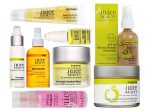
A Juice Beauty Product Profile

A good place to start when researching products is the Skin Deep Cosmetic Safety Database. By perusing this list you quickly see who is making products worth your time and money. One company that consistently rates very well is Juice Beauty. I was actually surprised by how well their organic beauty products score (low is good) because they are such a well known brand. For some reason I always figure the good stuff is some well kept secret due to low marketing budgets but Juice Beauty is highly visible (at least to me) and one of the safer choices we can make. Skin Deep tells that that most of their products score 1 or 2 which means low hazard.
They use certified organic ingredients so when you buy their Green Apple Peel for instance, you know the organic apple, lemon, grape, raw cane sugar and willow bark (sounds lovely doesn’t it?) in it, do not have harmful pesticides and agri chemicals. Same with the Cleansing Milk with raspberry and white grape juices, aloe vera, and nutrient-rich grapeseed oil. I love that they use ingredients that sound as though they could be a meal instead of a beauty product too. Their products do not have parabens, propylene or butylene glycols, petroleum, sulphates, PEGs, TEA, DEA, phthalates, GMO, silicones, artificial dyes or fragrances. You might pay a little more for organic, but isn’t your health and the health of your loved ones worth a few extra dollars? Of course it is.
Not only does switching to organic-based products help keep your skin and body toxin free, but it also can give your body some extra boosts. Did you know that many of the natural products contain vitamins and nutrients that help your body’s overall health? Just think about it… many of the ingredients are food/plant based and we know how rich they are in vitamins and nutrients and an estimated 64% of what you place on the skin is absorbed by it. It is fitting that truly conscious companies take us back to the roots of ancient beauty products. They were sourced from plant materials. From nature. Our ancestors knew that the best organic beauty products for your body were made from natural resources offered by the earth. Things really haven’t changed in that regard.
Another A+ for this particular company… they use recycled packaging, soy ink, and manufacture over 80% of their products with solar power.
For your best health, always buy organic. Look for the products that don’t contain preservatives, dyes or any other types of chemicals and preservatives. There is nothing wrong with wanting to look your and feel your best, but your health should be non negotiable.
* This is sponsored post. All opinions and content are my own.
From Sheila Sundberg of StylishHome.com
Nothing feels better on a cold winter night than curling up under a down comforter, and resting your head on a down-filled pillow. It’s luxurious, lightweight and oh-so warm. Down is the soft layer under the feathers from the chests of ducks and geese. It’s natural, sustainable and renewable, and using it means you can turn down the thermostat at night, thus consuming less energy. However, because it’s derived from animals, it’s not without controversy.
There’s a lot of debate over the use of down for bedding material, and many animal rights groups feel it should be banned. However, there are ways to ensure that the choice you make is right for you and your family. If you love down and wouldn’t dream of sleeping under anything else, learn what to look for. Understanding the process can help you make an informed decision.
How It’s Harvested Matters
True, bird feathers are natural. It’s how they’re harvested that can be a problem. It’s important to only buy items made with down that was harvested after the bird was slaughtered in the production of food. This ensures that the bird was not killed simply for its down. Some manufacturers will use the term “hand-harvesting,” or “live plucking,” to imply that their process is more humane because the bird wasn’t killed. Ripping the feathers from a live bird is not a humane alternative. There’s no conceivable way of doing this painlessly, so don’t be fooled.
How Can You Tell?
Unfortunately, manufacturers of down products don’t routinely slap on tags saying, “We didn’t pluck these birds while they were still alive,” so it’s tricky finding out what products you can feel good about buying. Here are a few guidelines to follow:
- The American Down & Feather Council is the voice of the down and feather bedding industry in the United States and has taken a strong position on the humane harvesting of feathers. Look for their seal on comforters and pillows, or check out their web site for a list of member retailers.
- Do you research. If you see a pillow or comforter you like, check out the manufacturer’s web site to see if they have an environmental policy. If they’re going out of their way to use humanely-harvested down, they’ll want you to know about it!
- Know the country of origin. Live plucking is rumored to still occur in China, Poland and Hungary.
- Although it can be difficult to identify the true origin of down, do your best to find out where it came from. The United States and Canada have strict guidelines for humane harvesting. Other countries probably do as well.
Keep It Eco-Friendly
Be sure the down used in the products you’re buying hasn’t been chemically treated or washed using chemical agents. Pacific Coast Feather Company, for example, advertises that they Hyperclean® their down, using only biodegradable cleaning agents. Also, buy only top-quality goose down if you can afford it—it’s cleaned according to strict standards and is less likely to harbor dust particles or debris. Duck down is less expensive, but not as soft.
Organic Covers
Look for pillows and comforters encased in 100% organic cotton, and be sure to use pillowcases and duvet covers made of eco-friendly materials too.
Once you’ve chosen your new down pillow and comforter, wrap yourself up and turn down the heat. Nothing could be cozier.