Easter products are hard to miss when you stop by the store these days. From plastic grass to cream filled chocolate eggs, the stuff is everywhere. But if you eschew all that plastic crap and you don’t particularly want your kids to have all that processed sugar what do you? Well, to start you need to pass by those prepackaged Easter baskets and make your own. It’s easy!
Here are some ideas on what you can add to make your child’s Easter basket natural, eco friendly, and most important… fun and memorable.
The Stuffing:
Shredded paper – A few weeks before Easter have your kids do some watercolor painting each day. What kids wouldn’t want to paint everyday? Use some of their creations to shred and line their easter baskets with. They will be colorful and planet friendly.
Real Grass – Growing your own grass is not hard. Find a container that will just fit inside your Easter baskets and line it with a few inches of soil and a generous sprinkling of grass seeds. Just keep the conatiners under a sunny window and water daily. Once you have a few inches of grass you can tuck them inside the baskets and fill with treasures.
The Sweet Stuff :
Dried Fruit – Raisins, dates, apples slices, peaches, apricots, cherries, blueberries, and strawberries are some kid favorites.
Lara Bars – We love Key Lime Pie.
Raw Vegan Chocolate Brownie Bites – They are quite yummy!
Organic Fruit Strips – You can make your own in a dehydrator or buy some from Archer Farms.
Chocolate covered nuts.
Trader Joe’s Yogurt Star Cookies – My kids like these and they remind me of Circus Cookies but without many of the unsavory ingredients. These are actually colored with blueberry powder.
Non Food Treats and Treasures:
Art Supplies – Beeswax crayons or Eco Stars, natural paints, a crayon roll, or other groovy supplies for budding artists and crafters.
Homemade play dough
Seed packets
Small games or puzzles (like the ones from Haba)
Paper Dolls – I like these dolls from Eeboo and these paper bunnies as well.
Clothing – For little girls now may be time to sew up a cute pillowcase dress for spring/summer. Boys (and girls too) might enjoy a cape.
Tegu Blocks – In the the groovy new pastels colors. My kids LOVE these.
Books – Some good books for spring include The Daring Book for Girls and The Dangreous book for Boys. Also Anna Banana: 101 Jump Rope Rhymes.
Gift passes to local play museums, amusement parks, movie theaters, or other fun places your kids like to go. This year we got indoor waterpark day passes for each of our kidlets. ;)
The possibilities are endless. What will go in your child’s Easter basket this year?

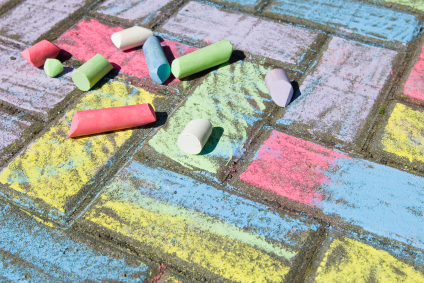
A reader recently emailed me and asked about a concern that came up among her local moms group. Some moms insisted that sidewalk chalk has lead in it and others insisted it doesn’t. So which is it?
Well the connection between sidewalk chalk and lead became headline news in 2003 when several stores recalled chalk for lead. The good news that there haven’t been major recalls since, indicating that reformulation has occurred. BUT the chalk that was recalled was not major brand chalk like Crayola it was off brand or generic chalk made in China and used by stores as their own “brand”. I believe Target was one of the offenders in the 2003 recall.
These days the Art & Creative Materials Institute, Inc. (ACMI) certifies 3 brands of chalk as lead free and safe for children.. Crayola, Prang , and Rose Art. These are well respected brands and you can feel at ease using them. Personally I would avoid off-brands you may find at discount stores like Big Lots, or those found in cheap gift baskets (like Easter baskets) or cheap art sets. If it doesn’t have a recognizable and respected brand… I wouldn’t buy it. Chances are they won’t contain lead but I err on the side of safety just in case. I also prefer Prang to most of the other brands. They are more expensive but they also have more sustainable products (such as their soybean crayons) and their web site has tons of safety data on each product they sell. You can also make your own sidewalk chalk and take charge of the ingredients yourself or buy homemade chalk made by artisans on Etsy, who I am sure would be happy to disclose their ingredients.
All in all I think parents can feel at ease letting their kids play with sidewalk chalk but as with ANY product we have to stay informed and be vigilant. In the meantime encourage your kids to get outside and “create”.

I don’t know about you but this time of year when I go to the store and see lots of plastic Easter grass, plastic eggs, and huge chocolate bunnies… it makes the environmentalist in me cringe? This is the big green mom conundrum… how to make holidays fun for our kids without leaving a large mark on our planet. Lucky for us though there are numerous ways to make Easter green without festooning our lovely planet with fake grass!
1. Give your children a decorative cloth bag with a set of child’s garden tools, seeds, or other gardening supplies instead of an Easter basket. You can put a few eggs in it with seeds and it can even contain “instructions” from the easter bunny asking your child to help plant spring flowers for bunnies and children everywhere to enjoy. Kids will LOVE getting a special assignment.
2. If you still want to go with a traditional basket, choose eco-friendly materials such as cotton, hemp, or jute. Or purchase hand-made, fair trade certified baskets that you can find other uses for after Easter (how about toy storage?). Thrift stores usually have baskets this time of year too (I know mine does)… used is better than new! Also, you can make your own Easter basket from materials around the house, such as hand-decorated bags, totes, wastebaskets, laundry baskets, etc.
3. Fill the Easter baskets with biodegradable, sustainable materials that can be composted, such as natural straw, hay, moss, or simply grass from outside. It is really easy to grow your wheat grass in the house, so start now to have some ready by Easter. You can also shred up the Sunday funnies or colorful scrap paper or shred some of those colorful catalogues and magazines that come in the mail. Kids won’t mind.
4. Make your own treats for the basket instead of buying the processed junk – make some raw cookies or brownie balls or dehydrate some fruit.
5. Re-use what you have. This is our secret weapon. We bought Easter stuff a few years ago from
yard sales and thrift stores mostly and we keep it all in a box in the garage. This includes everything from plastic and ceramic eggs, baskets, and Easter decor. We even have an Easter egg wreath made using leftover Easter eggs from years past and a Christmas wreath we got at a yard sale. We made it about 4 years ago now and it is still one of my kids favorite Easter decorations. If you already have plastic grass, use it as a base for a centerpiece or a creative springtime scene.
6. Decorate using scrap paper and junk mail – cut out bunny shapes and string them onto colorful yarn, or cut out Easter shapes into a chain. You can also use leftover felt or fabric scraps to make cloth eggs or to make stuffed bunnies. Cloth scraps can be used to make a decorative banner with felt letters thats says “Happy Easter”.
7. For your Easter feast eat bunny food. Serve cut vegetables, fruit, and maybe some dandelion greens in a green smoothie.
8. Dye eggs using natural easter egg dyes -mix a tablespoon of white vinegar per cup of boiling water and add onion skins (yellow), red cabbage (light purple), shredded raw beets (deep red), spinach (light green), coffee grounds or tea (brown), etc.
9. Get your eggs from a local farmer or urban chicken-keeper. If the eggs are brown, you can use eco-friendly paints on them instead of dyes. Also try blowing the eggs first so they can be kept for future years. Wooden eggs or knitted eggs are another good option as are some new Eco-Eggs Easter Egg Coloring Kits that you can buy.
10. Fill your children’s Easter baskets with enduring sustainable toys (puzzles, cute games), a deck of cards, dominoes, bunny books, etc. Take your child’s personality into consideration rather than just giving the “usual” stuffed bunny and plastic trinkets. Then you can build a basket theme around your child’s interests.
All of these ideas will help reduce waste this Easter season while preserving the “fun”. What is your best green easter tip?

What is eco friendly about Easter? Hmmm…not much. Cheap plastic eggs, plastic grass, candy with too much sugar and loaded with artificial coloring and flavors…. well at least most Easter egg hunts take place in the great outdoors. That is a start.
One of the first steps to having a greener and more eco friendly Easter is too make your own baskets. The ones you can by at the supermarket or Wal-Mart are just a bunch of cheap crap I find. It is not hard to gather little toys and healthy candies to make a quality basket on your own. In fact you can even grow real grass for them. Or use a paper shredder and shred some paper you have around the house. I also found really pretty paper grass you can buy too.
Don’t want to make your own basket? Check out these natural and fair trade Easter baskets.
Next up…consider ditching those conventional egg dying kits and dye your own eggs using natural coloring techniques. I wrote a post about this last year with instructions. But in general here is what you use for colors:
For pink and red colored eggs use cranberry juice, beets, or raspberries.
For yellow eggs use saffron or tumeric
For purple eggs use red wine.
For blue eggs use red cabbage leaves or blueberries.
For brown eggs use grape juice, rosehip tea, or coffee.
For orange eggs use yellow onion skins.
You can also use wool eggs! These are sooooo cute. Make your own or buy some from a
mom knitter. Here is another cool link using plastic eggs as a form to make wool ones….you are still buying the plastic eggs but they will last for years with a nice wool covering on them.
They don’t have candy in them but… hey that’s a GOOD thing. And they are more expensive but they can be reused again every year. Have your kids find them and trade them in for some treat of your choosing. But make sure keep track of everywhere you hid them because you’ll want to pick up any they didn’t find.
Also, make sure to invest in quality baskets that you can reuse every year. I have an Easter basket collection going in my basement so in a week or so when I start to put my baskets together I will just go down there and grab a couple.
Perhaps the biggest struggle for natural parents on Easter is candy. I know I can’t afford to slip up too much with unhealthy treats or my kids will have a melt down…especially my daughter…it isn’t pretty. There is nothing like a beautiful little princess in her Sunday best throwing herself on the ground in a tantrum because she wants one more Tootsie Roll.
For healthier candy options try these:
Yummy Earth Organic Lollipops
Fruitabu Organic Smooshed Fruit Rolls
Squirrels Nest
Non-candy treats and gifts consider:
Pineapple Flavored – Recyced Pencils
Soybean Crayons
Basura Coin Purse
Natural Finger Paint for Kids
Kids Gardening Kit
Bunny in the Box
Egg Shaped Chalk
Barefoot Books
Homemade Play Dough, Bubbles, or Silly Putty
Wool Flowers in a Metal Pot
The Velveteen Rabbit
Funky Stuffed Animals
Have a happy and green Easter everyone!
It is almost Easter time. Have you given any thought to how you can make Easter as “natural” as possible?
Last week I posted about some natural and fair trade Easter baskets and a chocolate making kit that you can buy from Global Exchange. While those are some great options for Easter, there are also some ways you can make having a natural Easter a DIY project.
Make Your Own Baskets - This is what I usually do. Just get a basket (we reuse every year) and take some paper laying around your house that you would usually recycle and run it through a paper shredder. You can also use scissors if you don’t have a shredder. Fill the baskets will little trinkets and toys, a stuffed animal, some felted wool eggs, crayons and water colors, organic juice boxes, and healthier candy like Dagoba Chocodrops. Whole Foods has a lot of healthy options for Easter Baskets.
Dye Eggs Using Natural Colors – Most people color their eggs with egg kits that contain dyes made from petrochemicals, but in times past eggs were colored with plant materials found in nature.
To dye eggs with natural coloring put raw, white-shelled eggs in a pan and cover with water and a teaspoon of white vinegar. Add your coloring agent and bring to a boil and then let the eggs simmer for 15 minutes. Rinse and allow to cool.
You can also hard boil them first and then fill glass jars with water and the coloring agent, putting the jars in the microwave for 2-3 minutes and then stirring. Then allow the eggs to sit in the jars overnight.
For pink and red colored eggs use cranberry juice, beets, or raspberries.
For yellow eggs use saffron or tumeric
For purple eggs use red wine.
For blue eggs use red cabbage leaves or blueberries.
For brown eggs use grape juice, rosehip tea, or coffee.
For orange eggs use yellow onion skins.
Happy Easter!!