A new study has been released by Enviromental Health Perspectives that addresses ways to reduce exposure to BPA and DEHP (bis(2-ethylhexyl) phthalate) by changing our dietary shopping practices. Essentially it evaluated exposure contribution by food packaging (canned foods and foods wrapped in plastic) and tested urine levels of BPA and DEHP metabolites before, during, and after “fresh foods” interventions. There were 20 participants in five families who were studied and they were self reported consumers of canned and plastic packaged foods.
The concern with canned food is the BPA lining used by nearly all canned good manufacturing companies. DEHP is a plastic softener that can be found in plastic that wraps food for protection. These chemicals are known to disrupt hormonal systems in the body leading to developmental and reproductive issues, obesity, and even cancers. And aren’t we fortunate that they both make an appearance in a wide variety of food packaging materials? Ugh…
So did the BPA and DEHP metabolite levels in the study participants decrease when they stopped using canned and plastic wrapped foods and switched to fresh foods? The results of study were quite telling. The levels were greatly reduced and would indicate that food packaging is a front runner in exposing us to these chemicals nasties. You are what you eat right? The intervention reduced concentrations of BPA by 66% and DEHP metabolites by 53-56%. Wow!
What we need to extract from this study is that food packaging is a major source of exposure to BPA and DEHP. Also, we CAN do something about it by making dietary adjustments and changing our food selections.
What Can You Do Personally?
- Opt for frozen, dried, jarred, or fresh foods instead of canned foods and beverages. If you do need to buy canned then buy Eden Foods brand, the only known brand to not use BPA. Campbell soup claims to be eliminating it soon as well.
- Buy loose fruits and veggies, not those wrapped in plastic. Bring your own cloth produce bags to carry them.
- Instead of buying bags of trail mix, beans, grains, rice, etc buy these loose and in bulk. Cloth bags or glass jars can be used to hold them.
- If you do buy food wrapped in plastic, like that yummy Smoked Gouda from Whole Foods, unwrap it and store in a glass refrigerator dish instead.
- Buy more fresh foods from the farmer’s market and less processed foods that need extra packaging.
- If you use baby bottles opt for BPA free ones or even better, glass baby bottles.
- Avoid bottled water, even the large 5 gallon containers. Filter your own tap water and fill reusable bottles.
- Sippy cups should be BPA free, like this EIO Glass Sippy Cup we used.
This recent study is a boon for parents because it provides data that shows us we DO in fact have some power here. We can significantly reduce exposure to some of these chemical in ourselves and in our kids by simply being diligent and shopping smarter.

I recently got to test out some Squid Balm products that were graciously sent to me. Most times I refuse any sort of product in the beauty and/or skincare realm. I get dozens of requests each week and I always have to politely explain that I can’t test them if I won’t use them. ;) Soap and shampoo bars are just my thing though. I was also very interested in trying a lotion bar since I have heard good things about them. Plus my skin has been drier since I started spending so much time in the pool. I wanted to try a moisturizer.
Anyway, I have been washing my hair 2-3 times a week using the shampoo bar. It foams up nice and it does the job well. After washing I have also been using the Squid Silk Solid Conditioner Bar in Wild Blueberry. I LOVE it!
Anyone who uses shampoo bars knows that they leave your hair drier and less shiny than chemical laden shampoos. This conditioner helps to remedy that. You rub it between wet hands and then rub it on the surface of your hair or your skin if you want. The smell is divine as well. Shampoo and conditioner using natural ingredients and they come in bar form. What else could I ask for?
The lotion bar has a really heavenly, albeit not overpowering scent called coconut peach. I am not a fan of scents in general but both scented products I got were a-okay for my delicate olfactory system. Anyway when you rub the lotion bar on initially it feels kind of sticky and that bothers me a bit. After 2-3 minutes or so the stickiness is gone and it feels nice and refreshing. The small tin it comes in is nice for throwing in your purse or gym bag too. Few people could carry around a bottle of lotion but this little tin would be no issue at all and it will last quite awhile.
In addition to being vegan, Squid Balm products are also nut-free, paraben-free, preservative-free, and phthalate-free. Handcrafted by moms as well.
In the end I would happily keep ordering all these products but especially the shampoo bar and conditioner bar because those are two things I cannot find locally. The only real criticism I have is that their web site was a bit hard to navigate with all the product descriptions sort of running together and the order buttons being nowhere near the photos of the item. Plus I didn’t see any “coconut peach” scented shampoo bars. ;)
Squid Balm get a big thumbs up from me.
The level of toxic chemicals in baby furniture is shocking. Sadly, most cribs on the market today are made of engineered woods like MDF and particleboard that contain formaldehyde and VOC-laden finishes. With newborns typically spending up to 16 hours a day sleeping, shopping for a safe crib is essential.
What Should You Look For?
Eco-friendly cribs can be found online and in major stores. When shopping for a crib, look for one that’s:
- Made of solid hardwood like maple
- Finished with non-toxic finishes
- Held together with non-toxic glues
Styles to Meet Every Taste
Green doesn’t have to mean ugly unfinished wood swimming in beige. Today’s eco-friendly cribs come in a wide variety of styles to suit every taste and budget. Here are some of my favorites:

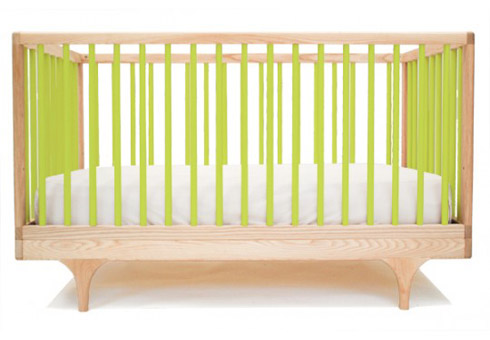
I love the sleek lines and ultra-bold color choices of the Caravan Crib from Kalon Studios. It’s available in 100% raw maple with black, red, yellow, blue or green rails.

OK, I have to say that it looks a little like a fish tank to me, but it’s still cool. The durable half-inch, BPA-free, phthalate free, 100% recyclable clear acrylic front on the Roh crib from Spot On Square gives your baby a true “room with a view.”

Love the Muu panel system! Customize the crib to suit your taste and easily change the panel out if you decide to update your décor. A magnet system securely holds each MuuPanel in place but allows it to be easily replaced in seconds; no tools necessary. First child a boy and second one a girl? Switch the panel instead of buying a new piece of furniture—another eco-friendly feature!

The podcot is a cozy cocoon-shaped crib that’s thoroughly modern and easily converts into a toddler bed. I love the unique rounded appearance.

The Duc Duc Cabana Crib. I remember dreaming of having my very own canopy bed when I was a little girl. Why not start your little one off right with this dreamy canopy crib?

The Dakota collection is the first Graco baby furniture to be eco friendly. Selling at stores such as Wal-Mart and Target, it’s also one of the first green cribs that’s truly affordable.

Celery’s Lullaboo line of furniture includes this crib made from bamboo and low-VOC paint and finishes. It has adjustable supports that extend the sleeping platform as your baby grow. You can even swap out one of the end panels for a chalkboard. How clever is that?

The Solare crib from Q Collection is made of 100% locally-sourced solid ash and bentwood construction. Handmade in the USA, it was selected by treehugger.com as their “dark green” selection for new parents. My favorite part—the built in mobiles at each end.
See related article: Eco Friendly Highchairs
A Guest Post by Sheila Sundberg, one of the owners of StylishHome.com

1. Avoid plastic bags at the grocery store. This applies to the bags you get at checkout AND the plastic produce bags you put your loose fruits and veggies in. There are two really easy, really affordable products you can use instead of plastic so there is very little excuse to keep bringing plastic baggies home.
Reusable Grocery Bags – Cloth bags can be bought at most grocery stores for $1 nowadays and you can usually find good quality bags for $10 each that will last for years and years AND can be used for other things. My favorite reusable bag is the ACME Earth Tote from my fave online store, Reuseit. It is large enough for groceries, has pockets, and I use it as my weekend bag for trips to my parents house. During the summer we used it to tote towels and toys for the water park. LOVE this bag!
Produce Bags – When you want to load up on apples, celery, fresh greens, carrots, bok choy, wild mushrooms, etc. skip the plastic produce bags the store provides. You can bring your own mesh or muslin bags. They are super light weight and much better for the planet than plastic. The muslin bags even work for beans and grains.
These are some of my fave bags from my collection of produce bags: These are all from EcoBags.
.jpg)
2. Use glass food storage dishes. You can buy plastic so cheap that it seems that is what most people do nowadays. They buy a box of 15 plastic dishes to store leftovers and lunches in and never consider the environmental or health implications. For the price of that one bulk box you could buy one or two really nice glass refrigerator dishes and just wash them more often. You can also find vintage glass and Pyrex refrigerator dishes at yard sales and thrift stores. I found a yummy green Pyrex dish for $3 just last fall! I also buy mason jars from thrift stores and use those:

Check out my Squidoo lens on BPA, PVC and Phthalate Free Food Storage. It has a big list of glass and stainless steel food and liquid storage containers.
3. Instead of prepackaged foods wrapped in plastic buy loose or fresh foods. Mushrooms can be bought in foam containers wrapped in plastic and they can be bought loose and taken home in a produce bag. The same is true of greens, veggies, and many fruits. It might be slightly more work and expense to buy all the salad ingredients separate instead of salad in a bag… but the health and environmental benefits are worth it. Instead of buying your milk in a carton or jug (which are both made with plastic) see if you can find a way to buy in glass jars, perhaps direct from the local dairy farm. You could also switch to homemade almond milk, which is healthier anyway. Instead of buying yogurt cups you could start making your own, it’s actually pretty easy. I grew up eating homemade yogurt. Yum!
4. Make your own cleaners. Instead of buying plastic bottles of cleaners (even greener cleaners, make your own from natural ingredients and reuse those plastic bottles instead of buying new. You can even label them so you know exactly what is in them. Laundry soap (both dry and liquid, all purpose cleaner, carpet cleaner, scrubbing cleaner, all of it can be made at home sustainably and affordably. Check out Make Your Place: Affordable & Sustainable Nesting Skills. It is an awesome resource.
5. Get in the habit of thinking about every plastic purchase you make. Is the item made of plastic? Is it wrapped in plastic? Will it last? Can I buy it used? Can I recycle it? When you ask these questions you can usually find a non-plastic alternative, a used alternative, or you may decide not to buy it at all. When we don’t ask these critical questions we never stop to really think about how our purchases decisions really impact the world around us.
The only way we will wean ourselves form plastic dependency is to take baby steps and ask the tough questions.
How are you doing on reducing your plastic consumption? Share your tips or stories in the comments!
Just when we get think we got rid of all the yucky products and toys in our house that have phthalates and PVC…boom another source is discovered. I was really surprised to read over at Debra Lynn Dadd’s message board that many moms are reporting chemical burns from those nifty tagless clothing items. Oy-vay!
Tagless clothing for everyone is the latest rage. With so many kids having sensory issues these seem like a lifesaver. Athletes and fitness buffs love them too because they despise chafing. But according to that message board these labels may be made with “PVC blended into a Phthalate” or ink with “small levels of formaldehyde”. It was even stated that “residual phthalate from not fully fused ink is what is most likely causing the reaction.” And the reactions are horrible. Read this description of a reaction to Carter’s tagless clothes and look at these pictures.
My 8 month old son has had a red, swollen sore/ rash on the top of his back intermittently for the past three months. It seemed rather strange because it was very specific- had clear outlines and it looked like a postage stamp. About three weeks ago, it began weeping intermittently with brown fluid and wouldn’t close. It was bright red and looked like a burn.
At that point, we surmised that it was possibly an aggressive dairy allergy. We dressed him in some Carter’s tagless pajamas and put him to bed.
When I changed him the next morning, I attempted to remove his pajamas and pretty much freaked because as I took off his pajamas, the skin on his upper back came off with it. It was weeping a brown fluid and as I examined the garment, it was evident that the wound fluid had VERY specific demarcations- it was only on the “tagless” carters’ 9 month transparent label.
Wow! This same mom claims that she spoke with a manager a Gymboree who was all too familiar with this complaint. How scary is that?!
If you or your children have any of these tagless clothes pay special attention to any rashes or sores that may develop in the area where the tag is. I cannot confirm if these labels do in fact PVC or phthalates but I would err on the side of caution myself. If these labels are causing chemical burns then we know whatever it is…is pretty nasty stuff.
Update: ZRecs has reported that Carter’s tagless lables were/are made with phthalates and they think the problems with thier labels was isolated to one season.